Back to All Events

Three Treasures Practice

Three Treasures Practice Program

8:00am-10:30am
Second Sunday of each month

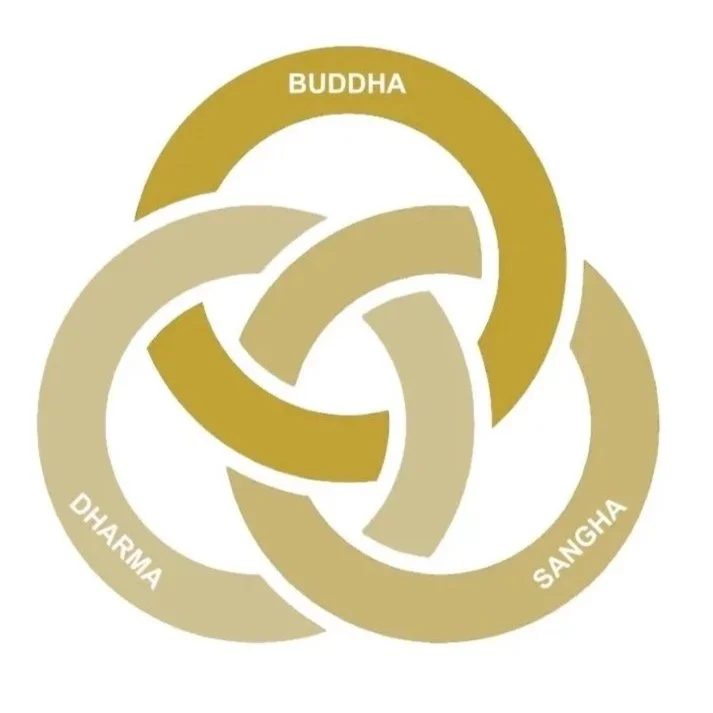
In Zen Buddhism, we take refuge in and maintain the three treasures as the manifestation of awakened life:

  • Buddha: practice; our awakened nature

  • Dharma: study; all the phenomena of existence, witnessed clearly

  • Sangha:community;the harmony of all beings and phenomena in awakenedness

Join Eon Zen and One Body Sangha in the practice of the Three Treasure through meditation, dharma study and community online over zoom on the second Sunday of each month.

All are welcome.
You may join for all or any part of the program.

Buddha Circle | 8:00-9:00am MT
8:00am-8:25am Zazen (Sitting Meditation)
8:25am-8:35am Kinhin (Walking Meditation)
8:35am-9:00am Zazen (Sitting Meditation)

Dharma Circle | 9:00-10:00am MT
Dharma Dialogue and Practice Discussion with different topics each month and special guests.

Sangha Circle | 10:00-10:30am MT
Connect with other sangha members for informal Q&A and discussion

__

All times are US Mountain.
Please verify your local time here.

CONTRIBUTION TO ATTEND

  • Eon Zen and One Body Members:
    Included with Membership

  • Non-Members: $10

Three Treasures Program
from $5.00

Meditation, Dharma Study, and Community | 8:00-10:30am Second Sunday of each month online.

If you are able to contribute an additional amount to support the participation of others, we would be very grateful for your generosity. If you are unable to contribute the full amount, please pay what you can as you are able. No one will be turned away for lack of funds. Contributions help to support our technology platforms and ensure the practice is available and accessible for everyone.

If you attend regularly, we invite you to explore becoming a member or offering a monthly recurring donation. Learn more ateonzen.org/membership andonebodysangha.org/donate.


One Body. Three Treasures.

Excerpted from The Three Treasures: Buddha, Dharma and Sangha, Dharma Talk by Bernie Tetsugen Glassman, Roshi given at ZCLA on December 3, 1977

The Three Treasures of One Body.

This is the usual way that we think about the Three Treasures. First, being Buddha; second, Dharma; third, Sangha. In this case, the implication of Buddha is dharmakaya, the world of emptiness, the state of equality, the state of oneness. Buddha. What is the state of oneness, the state of equality, the world of emptiness? If we relate it to our very life at this very moment, what is the state of oneness? It’s this very moment without any discrimination, without any dichotomizing. It’s the absolute fact of this very moment, the world of emptiness. These are no ideas, no concepts put upon it. This very moment is nothing but mu, nothing but counting the breath, nothing but shikantaza. Any discriminating at all, any thinking at all, any ideas, any concepts that come up take you out of this world of emptiness, out of this state of equality. That’s the Buddha of One Body.

Dharma of One Body, that’s all the phenomena. This very moment exists and consists of everything: of me talking, people listening, stick in my hand, book on this table, microphone, children playing outside, the whole world of phenomena existing right now, happening right now. That’s the dharma. Every single thing different, happening right now. That’s the Dharma of One Body.

The Sangha of One Body is harmony. That’s the harmony that exists between Buddha and Dharma. Being one thing, this very moment, Buddha and Dharma can’t be different. The world of emptiness and the world of form can’t be different. The world of equality and the world of differences can’t be different. It’s just this very moment itself. So harmony, the intertwining of the Buddha and Dharma, is the intertwining of equality and differences, of form and emptiness. That harmony is the most intimate kind of harmony that can exist because it’s not the harmony of two different things. It’s the harmony of one thing, being seen or looked at in two different ways. That’s the Sangha of One Body.

Manifested or Realized Three Treasures.

The next way of looking at these Three Treasures is as the “manifested” or “realized” Three Treasures. In this case Buddha is Shakyamuni Buddha. Who is Shakyamuni Buddha? We have to realize the state of equality, the state of phenomena. We have to realize what Buddha is, what Dharma is, what Sangha is, ourselves. We have to experience it. And if so, we become realized buddhas. We have to experience it ourselves and not take the word of anyone else. Then the manifested or realized dharma becomes the teaching of Shakyamuni Buddha — the sutras, discourses — the form of the Realized Buddha. The Sangha becomes those disciples of Buddha who realize the Way.

Maintained or Abiding Three Treasures.

Last is the “maintained” Three Treasures. This very moment is nothing but the Three Treasures, yet we have to realize it and manifest it, and it has to be maintained. It has to be transmitted from generation to generation. In the Jukai Ceremony, [the preceptor] will say: “These Precepts were handed down from Shakyamuni Buddha generation after generation, up to myself. And now I hand them down to you.” This lineage is extremely important, the Maintained Three Treasures. The buddha is all the images, all the iconography that we have. The Dharma is the teishos (dharma talks) and the texts of those who have realized the way from generation to generation. The Sangha is the students and disciples who have transmitted the Way from generation to generation.

__

All of these three ways of looking at the Three Treasures have to be there.

One Body - that’s this very moment itself.

If we don’t realize it, if we don’t realize what this very moment is, we can’t say that we are the Three Treasures even though we are the Three Treasures. Even saying it, we can’t accept it. So we have to experience it, and this has happened from generation to generation. It becomes the most vital function of those who realize the way — to maintain it so that it continues from generation to generation even though from generation to generation, we are still nothing but the Three Treasures itself.

Previous
Previous
June 8

Monday Program

Next
Next
June 15

Monday Program